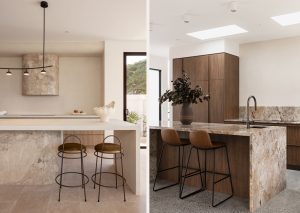
Most people start choosing stone with something they love the look of: a sweep of veining across an island, warm cream tones beside timber cabinetry, or a slab that makes them stop for a second look.
Then someone mentions maintenance, and suddenly the conversation involves lemon juice!
Then come the practical questions. How will it wear? How much care does it need? And is there another stone with a similar feel that might better suit the way you live?
Marble and quartzite regularly find themselves on the same shortlist. Sometimes they share a surprisingly similar appearance. At other times, their character takes them in very different directions.
There is more to the choice than looks and a list of pros and cons. The best fit depends on the particular slab, where you want to use it, and what you expect from a surface that will see plenty of everyday life.
Marble has been part of our buildings and homes for centuries. It has seen plenty of design trends come and go, and still looks perfectly at home in a contemporary kitchen. That staying power comes partly from its familiar beauty, but also from how much variety there is to choose from.
A softly veined white marble and a richly coloured breccia can give a room a completely different personality. Some marbles sit quietly with the other finishes. Others make it fairly clear who is the main character.
Quartzite is a more recent favourite in the residential benchtop market, although the stone itself has been around rather longer. Its popularity has grown because it brings together beautiful natural colour and movement with strong resistance to scratching and etching from ordinary kitchen acids.
That has brought more attention to the breadth of its palette. Pale creams sit alongside pinks, greens and dramatic mineral patterns, giving designers plenty to work with beyond the familiar white-and-grey kitchen.
Put genuine Calacatta marble beside one of the bold Patagonia varieties sold as quartzite, and you can see why the decision is about more than which surface is harder.
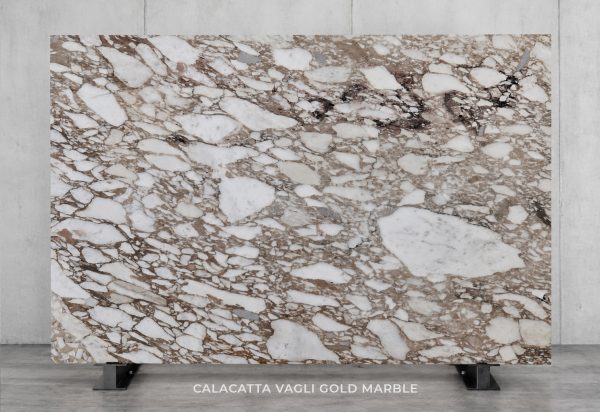
Calacatta marble is known for its pale background and distinctive veining, which can range from broad grey movement to warmer gold or richly coloured accents, depending on the variety. Across a large island or splashback, those veins can be the detail that brings the whole room together.
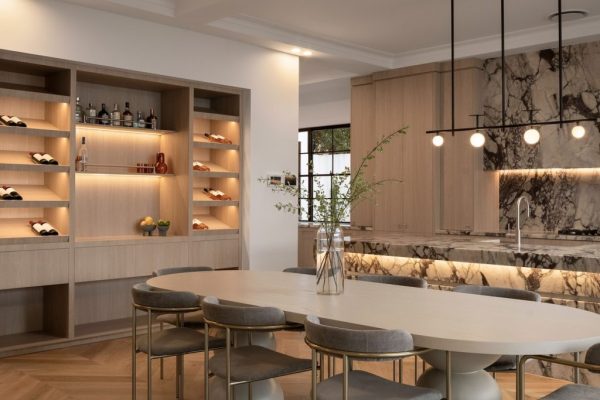
Other materials may suggest a similar look, but genuine Calacatta marble has its own identity. If a particular slab’s veining is what you love, a stone with a vaguely similar colour may not give you the same feeling.
Patagonia offers a different kind of drama: large crystalline areas, contrasting mineral formations and a fragmented pattern that can feel almost like a landscape viewed from above. Rather than a vein travelling across a pale background, the interest comes from the relationship between those larger areas of colour and crystal.
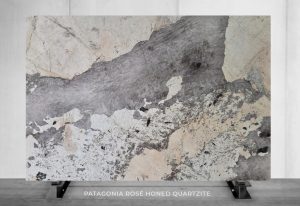
At the quieter end of the palette, there is more overlap between marble and quartzite.
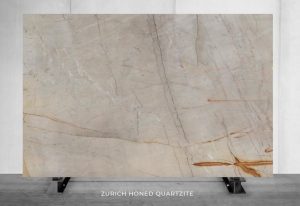
Zurich and Bianco Superior quartzites offer lighter palettes that can appeal to people who love the look of pale marble. Paired with timber and softer cabinetry colours, they bring natural detail while leaving room for the other finishes to shine.
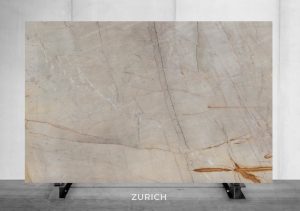
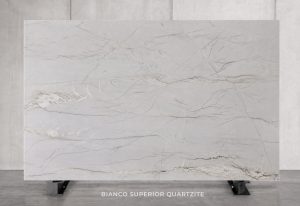
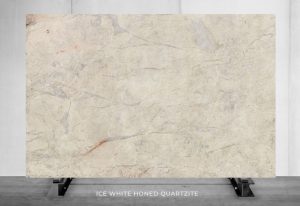
Ice White and Oxus White quartzites offer another take on the lighter look, with their own patterns and movement adding interest to a pale palette. They can work beautifully in a room where you might otherwise consider light marble, while bringing their own character. Both are worth considering if you are drawn to lighter marbles but want greater resistance to everyday scratching and kitchen-acid etching. Think of them as alternatives within a similar palette, rather than exact replicas.
 .
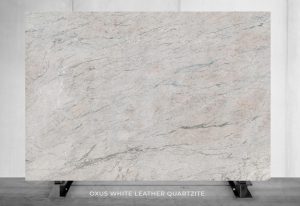
Those differences are much easier to see in person. Two stones that look similar on your phone can feel quite different beside your actual cabinetry samples.
Taj Mahal has become a popular choice in recent years, and its appeal is easy to understand. Warm neutrals, gentle movement and the practical qualities of quartzite make it a versatile starting point for a kitchen.
There is a reason it keeps turning up in kitchens. But we think there are a few other slabs that deserve their moment.
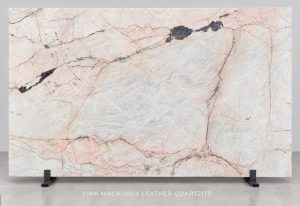
Pink Macaubus introduces a softer pink direction into the palette. It is worth exploring if you like the gentleness of Taj Mahal but would welcome a little more colour. The effect will depend on the particular slab and how its tones work with your cabinetry and flooring.
Zurich again, offers another cream-toned quartzite option to compare. Viewing it alongside Taj Mahal allows you to assess the differences in movement, background colour and overall character, rather than choosing from names alone.
Oxus White is worth considering for a lighter scheme, with white, cream and grey tones that sit comfortably within a soft, neutral palette. This slab’s leather finish adds a tactile element, making it an interesting option if you love the look of pale marble but are leaning towards practical advantages of quartzite.
These are alternatives to explore, each with its own look. You may arrive convinced you want Taj Mahal and leave thinking about something else entirely. It happens.
The everyday differences come down to what the stones are made of. Marble is predominantly carbonate-based, while quartzite is predominantly quartz-based. You do not need to remember the geology, but it helps explain what happens when dinner preparation gets underway.
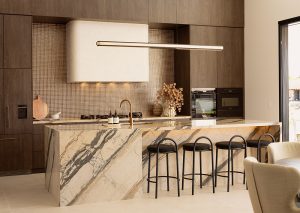
Breccia Etna in ‘Platypus’
In everyday use, quartzite is generally more resistant to scratching and does not etch from ordinary kitchen acids such as lemon juice and vinegar. Marble is softer and can develop scratches and etched areas as it is used.
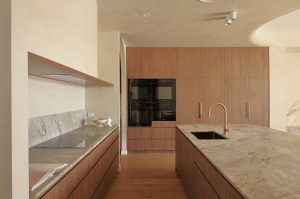
Etching changes the surface finish, often leaving a dull or lighter-looking mark. Staining is different: it happens when something absorbs into the stone and causes discolouration.
Appropriate sealing can help reduce staining, but it does not prevent marble from etching.
That distinction is worth understanding before choosing a benchtop. Our guide to Everything You Need to Know About Marble Kitchens explains more about living with marble, including care and the changes you can expect with use.
Quartzite can also absorb liquids, with porosity varying between stones. Greater hardness does not mean every quartzite has identical sealing requirements, or that it is immune to chips and other damage. At Finestone we can help you understand the care requirements of your selected slab and liaise with your stone mason.
For both materials, chopping boards, trivets, prompt spill clean-up and suitable stone cleaners remain sensible habits. A durable benchtop still appreciates a bit of consideration.
Marble does not stop being beautiful when it shows signs of use. Small scratches and changes in the finish gradually become part of its patina. Many people enjoy that lived-in character, particularly alongside timber and other materials that also change with age.
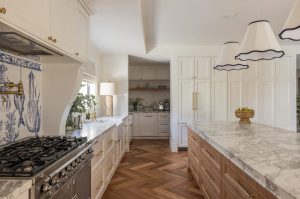
The question is how you feel about it. If a small mark will catch your eye every time you walk into the kitchen, it is better to know that now. There is no prize for choosing a material that makes you nervous about making lunch.
A honed finish may make some surface changes less noticeable than a reflective polish, but it does not remove marble’s sensitivity to acids. If keeping a consistently unmarked surface matters to you, genuine quartzite may be a more comfortable choice.
If you love marble and are comfortable with it developing signs of everyday life, it can be a lovely material to live with. Our marble kitchens guide takes a closer look at patina and finishes, helping you decide whether that gradual change is something you will enjoy.
It is about knowing what you are choosing, so you can relax and use the kitchen.
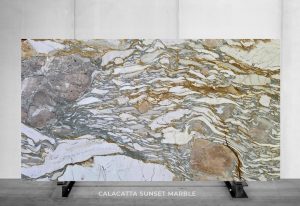
There is no simple rule that marble costs more than quartzite, or the other way around. Availability, rarity, the particular slab and how much you need all affect the price.
Quartzite’s hardness can make fabrication more demanding, while particular marbles can command a higher material price. Ask your stonemason to compare complete installed costs for your shortlist, including edge details, cut-outs and any matching across adjoining surfaces.
Comparing marble and quartzite is a useful starting point. But once you begin looking at the slabs, the broad categories only tell you so much. There is a lot of variety within both.
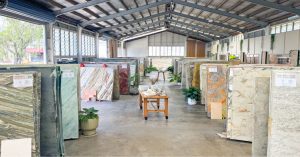
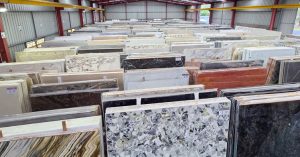
At Finestone, viewing full slabs gives you the opportunity to see those differences properly. Bring your cabinetry and flooring samples, look at the movement across the whole surface, and discuss the practical requirements with the team and your stonemason.
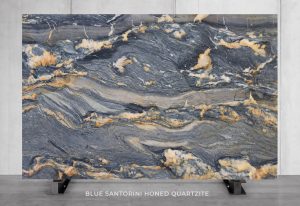
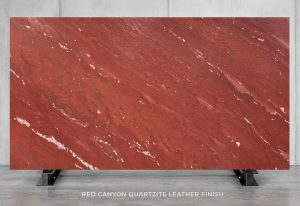
You may find that Calacatta marble gives the room exactly the character you wanted. Or that Patagonia Rose, Blue Santorini or even Red Canyon takes the design somewhere you had not considered.
The right stone should be something you enjoy looking at and feel comfortable using. After all, the kitchen is going to see breakfasts, rushed dinners and the occasional spill, as well as the good-looking photographs.
Come and explore our full range of slabs in person. Our team of experts is here to guide you every step of the way – from design inspiration to installation advice. Contact Us today.